Samuel Agbede / An open notebookSay hello ↗
In a room with peopleAll talks

Talks &
conversations.

  1. 16 Sept 2026 / Redis AI tech talk series

    AI tech talk series: Search

  2. 8 Sept 2026 / AgentCon London

    Reducing LLM Calls with Vector Search

  3. 2 Sept 2026 / Python Glasgow

    Building an AI Travel Agent That Actually Remembers You

  4. 10 Jul 2026 / WeAreDevelopers World Congress 2026

    Context Engineering Needs a Context Engine

  5. 23 Jun 2026 / Edinburgh Data Science and AI meet-up

    Semantic Caching for Production LLM Applications

  6. 4 Jun 2026 / LJC Meet-up at Redis

    Designing Production-Ready Multi-Agent Systems with Spring AI

  7. 7 May 2026 / Devoxx UK 2026

    In the Land of the AI Agents, the One-Layer Memory Is King

  8. 7 May 2026 / Devoxx UK 2026

    The Anatomy of Memory in Humans and AI Agents

  9. 23 Apr 2026 / Devoxx France 2026

    The Anatomy of Memory in Humans and AI Agents

  10. 31 Mar 2026 / Codemotion Conference Roma 2026

    Introducing Redis Agent Memory Server

Learning Out Loud05
Selected talkResources

2 Sept 2026 / Python Glasgow

Building an AI Travel Agent That Actually Remembers You

Glasgow, UK · Samuel Agbede

Audience takeaways

  • Design agent memory as a system for extraction, scoped storage, deduplication, expiry, and retrieval rather than treating it as a saved transcript.
  • Use Redis Agent Memory Server to manage short-term and long-term memory while application code stays focused on the agent's behaviour and user experience.
Notes from the event

At Python Glasgow, I spoke about building an AI travel agent that can remember useful context across interactions rather than treating every conversation as if it were the first.

Using travel planning as the example, I showed how persistent memory can create richer, more personalised agent experiences. A travel agent becomes much more useful when it can remember details such as a user’s preferences, budget, and accessibility needs across trips.

Building a reliable memory system from scratch becomes complicated quickly. Storing information is only one part of the problem: you also need to decide what to extract, deduplicate memories, scope them to the right user, separate short-term and long-term memory, manage TTLs and expiration, and retrieve the right memories when the agent needs them. This gave me an opportunity to show how Redis can provide much of that infrastructure, allowing developers to focus on the behaviour and experience of their agents rather than rebuilding the underlying memory layer.

The audience asked thoughtful questions, particularly about whether developers can configure TTLs for short-term memories and how AI agents interact with Redis Agent Memory Server in practice.

I also included a QR code for developers who wanted to continue the conversation in the Redis Discord community. It was a useful evening: a chance to introduce Redis as infrastructure for agent memory, hear the questions practitioners have, and build a stronger connection with the local Python community.

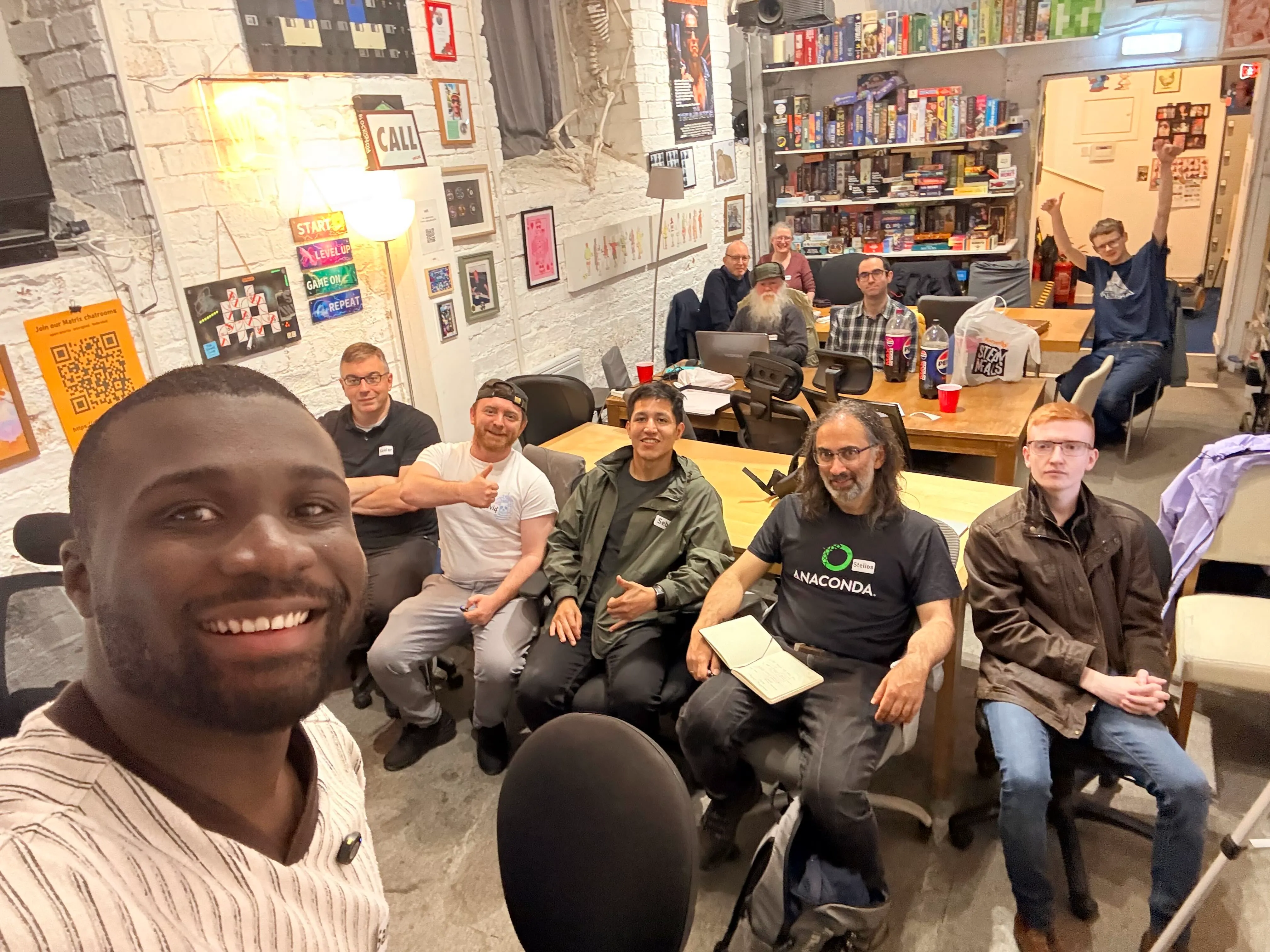
Samuel Agbede with the Python Glasgow audience after the talk.

10 Jul 2026 / WeAreDevelopers World Congress 2026

Context Engineering Needs a Context Engine

Berlin, Germany · Samuel Agbede

Audience takeaways

  • Recognise when context quality, rather than model capability, is the real bottleneck in an AI agent.
  • Design a context layer that brings memory, state, retrieval, APIs, and caching together behind a clearer abstraction.
Notes from the event

A WeAreDevelopers World Congress talk on why stronger models do not remove the need for better context systems around them.

My main argument was that as LLMs get better at reasoning and tool calling, the bottleneck shifts from whether the model can do something to whether we can get the right context to the model at the right time.

I focused on agent memory, traces, and the idea of a context engine: an abstraction layer between agents and the data they need to act, including structured data, unstructured data, APIs, state, history, memory, search, and caching.

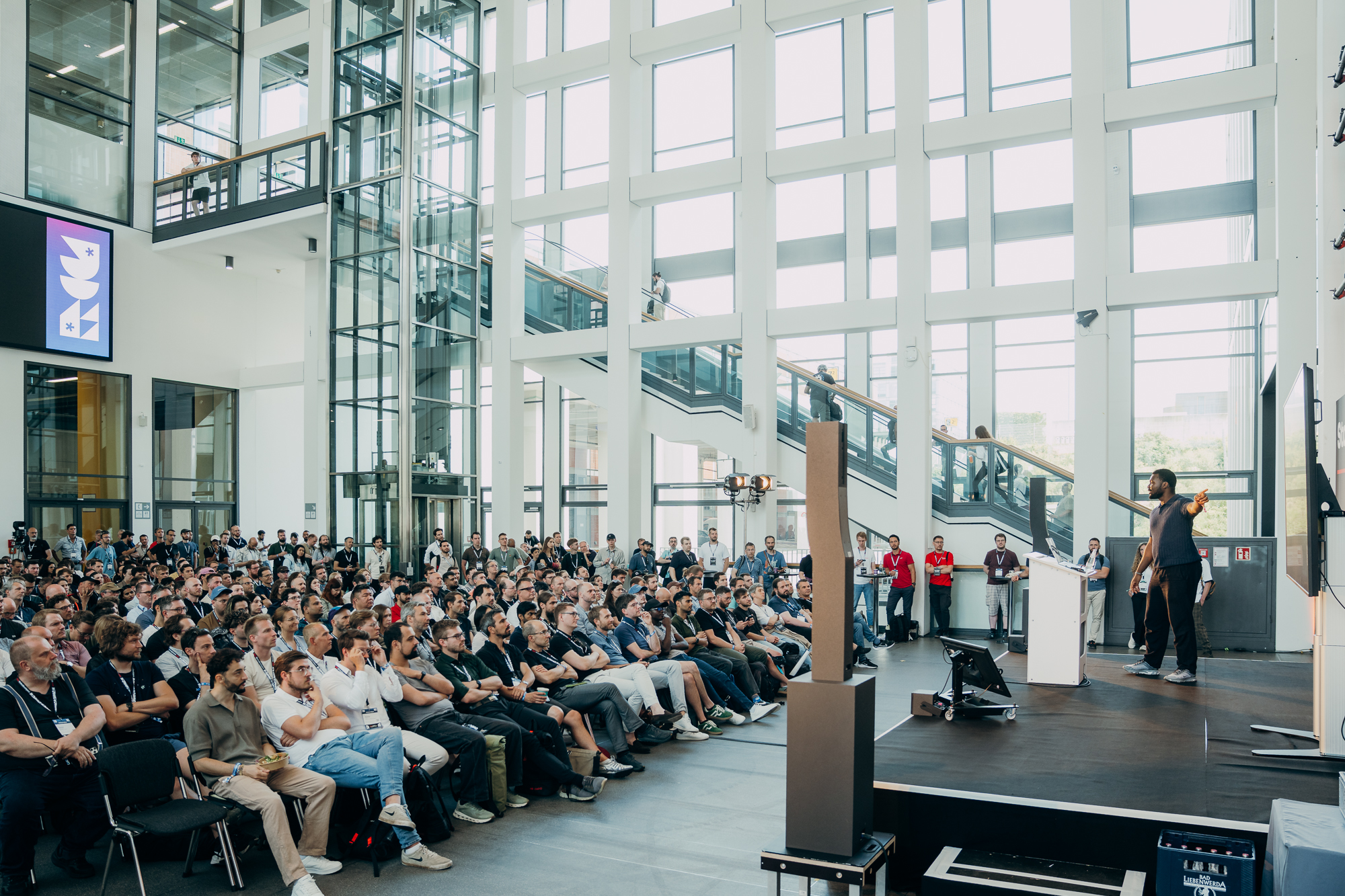
Samuel speaking to the WeAreDevelopers World Congress audience on Stage 1.

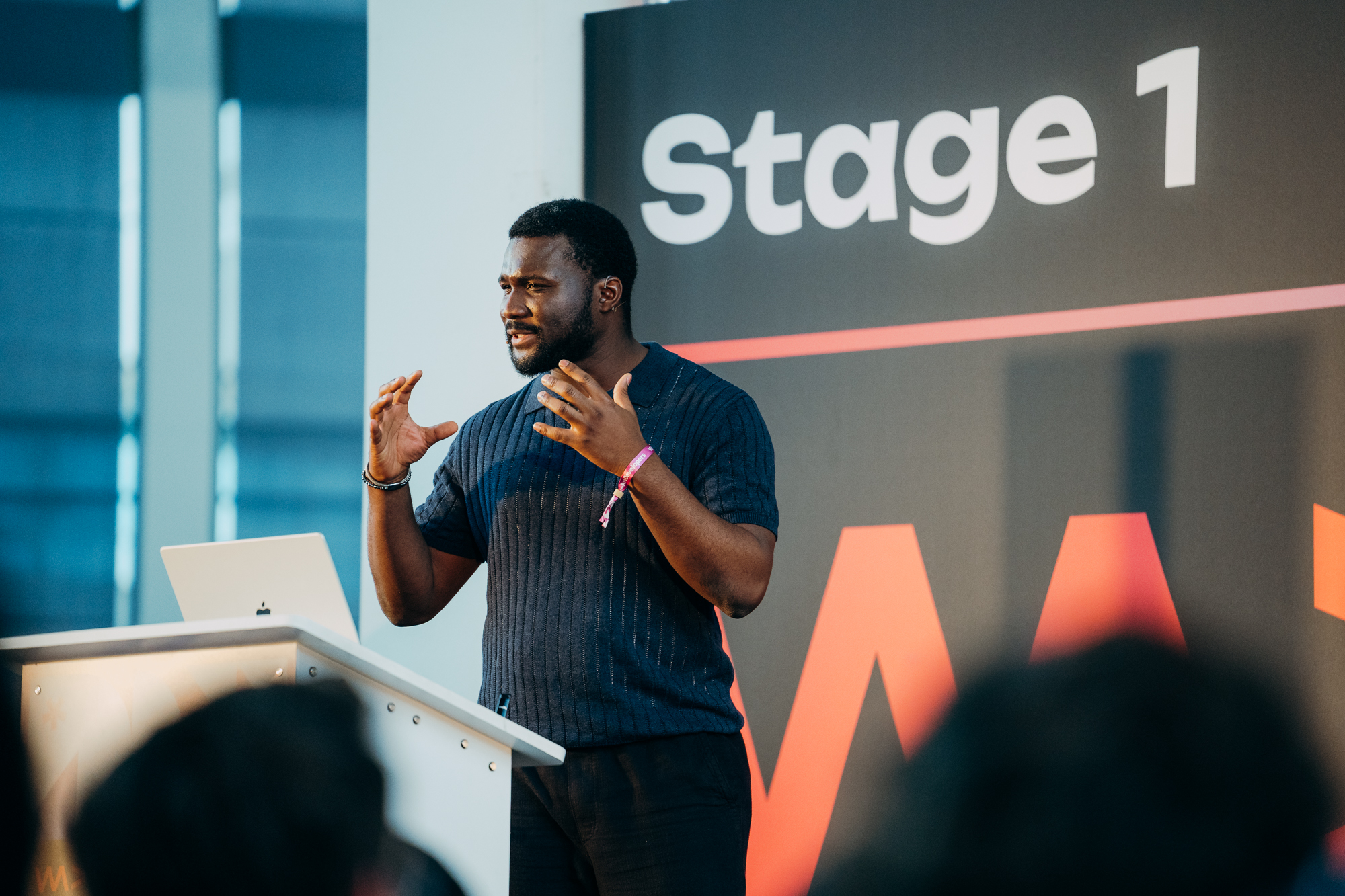
Samuel explaining context engineering during the WeAreDevelopers World Congress talk.

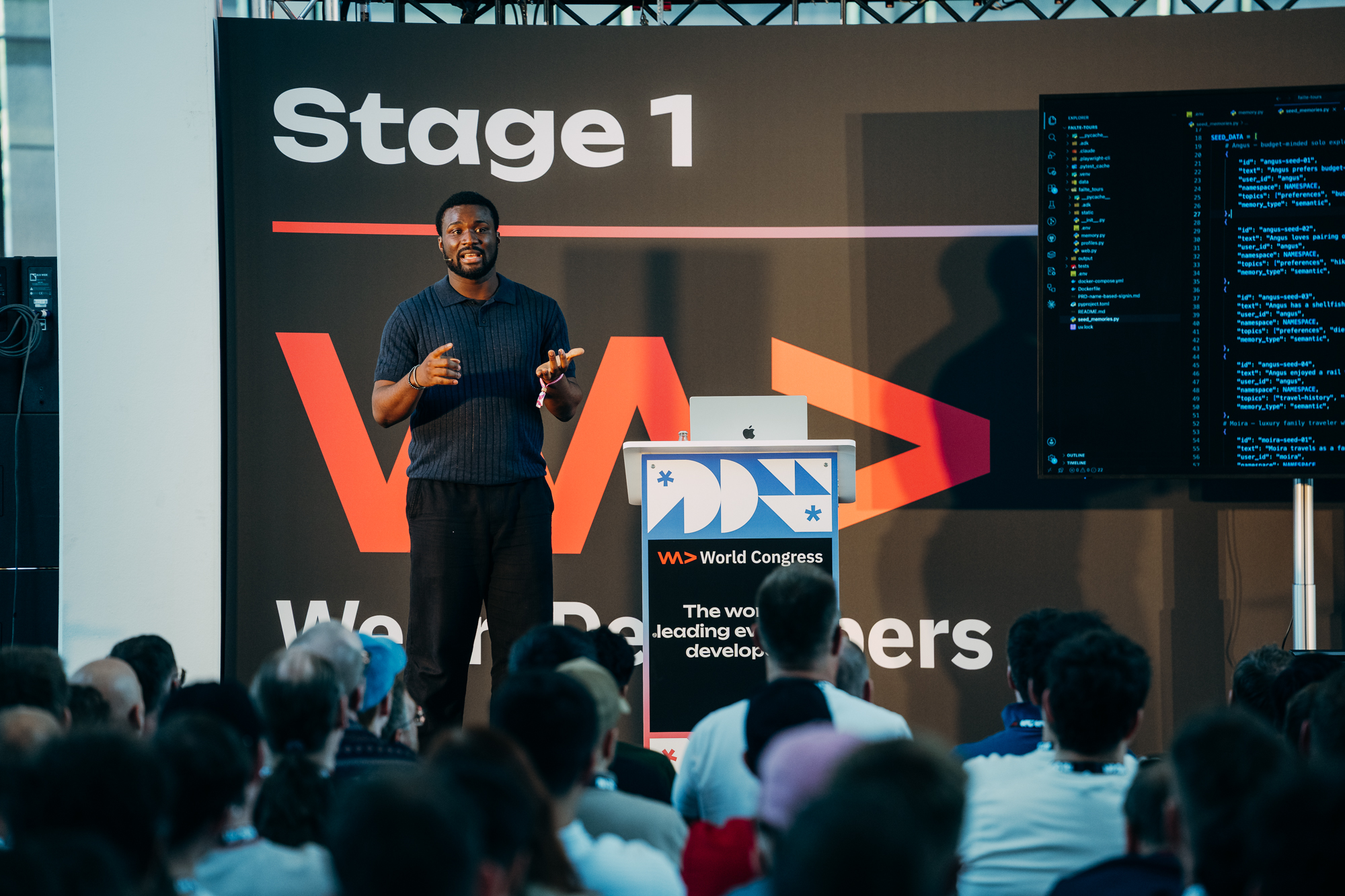
Samuel presenting with code visible on screen at WeAreDevelopers World Congress.

23 Jun 2026 / Edinburgh Data Science and AI meet-up

Semantic Caching for Production LLM Applications

Edinburgh, UK · Samuel Agbede

Audience takeaways

  • Explain how semantic caching recognises equivalent questions even when their wording differs.
  • Scope, expire, and evaluate cached responses so lower cost and latency do not come at the expense of correctness.
Notes from the event

My first time speaking at the Edinburgh Data Science and AI meet-up.

I spoke about semantic caching: the idea that LLM applications can reduce cost and latency by recognising when two differently worded questions are really asking the same thing. The simple version sounds easy, but production use brings real design choices: what to cache, how to scope responses to the right users, how to handle false positives, and when cached answers should expire.

The questions and interactions afterwards were excellent. I also enjoyed Stelios Christodoulou’s talk on the ethical, technical, and philosophical considerations of scraping web data in an AI world, especially his framing of a “considerate scraper’s code of conduct”: reuse in-memory copies where possible, respect licensing and attribution, and work with data providers through APIs and alternative sources where you can.

Massive thanks to Emily Takeva, JP Hwang, and David Wood for putting together an excellent event. First time attending this meet-up. Definitely not the last.

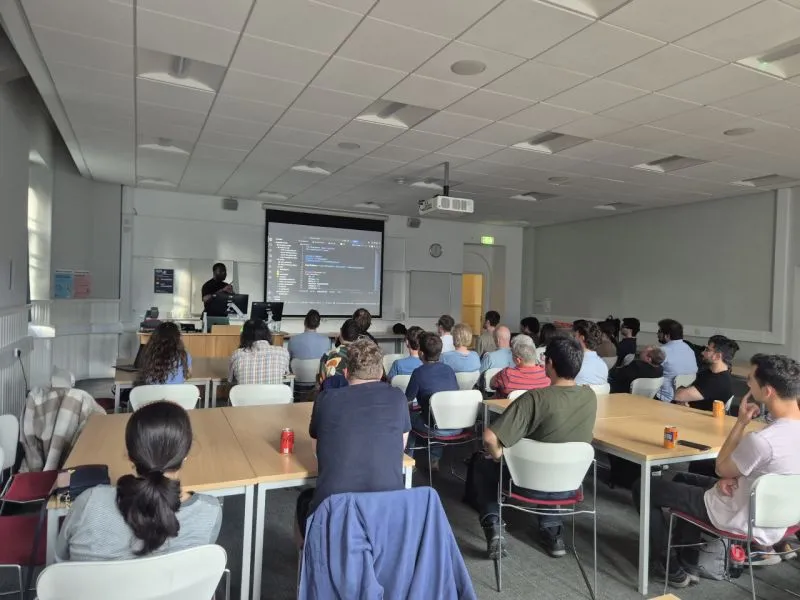
Samuel speaking about semantic caching to the Edinburgh Data Science and AI audience.

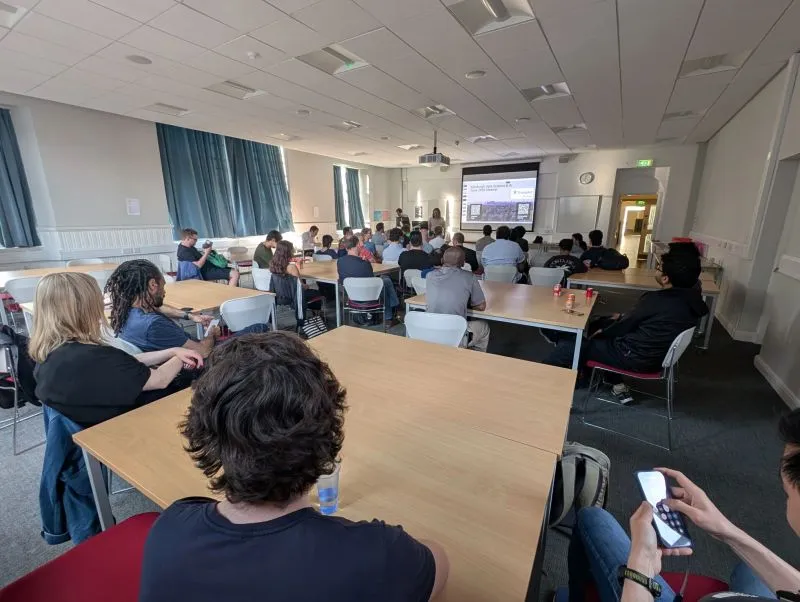
The Edinburgh Data Science and AI meet-up audience during a talk.

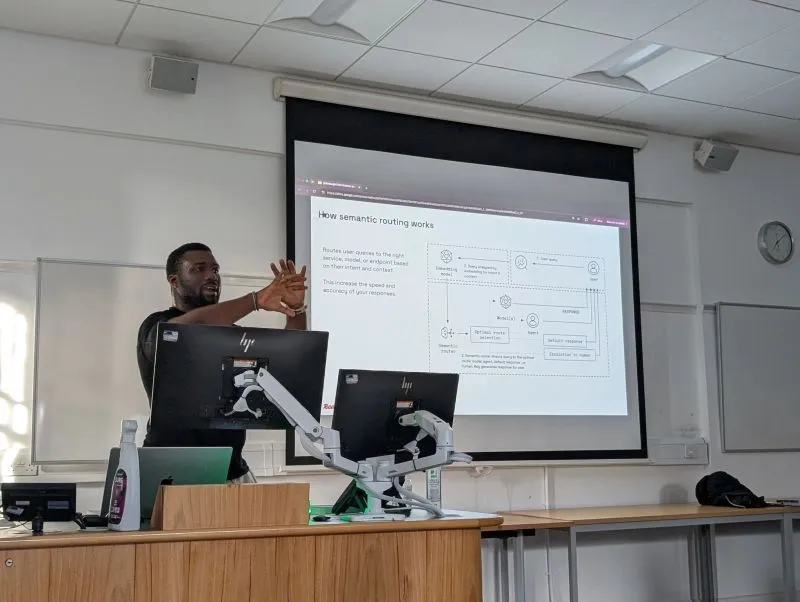
Samuel presenting a slide on how semantic routing works.

4 Jun 2026 / LJC Meet-up at Redis

Designing Production-Ready Multi-Agent Systems with Spring AI

London, UK · Samuel Agbede

Audience takeaways

  • Understand how semantic caching, routing, vector search, and memory fit into a production multi-agent workflow.
  • Evaluate retrieval and embedding choices through practical trade-offs rather than treating them as interchangeable components.
Notes from the event

A London Java Community talk on building production-ready multi-agent systems with Spring AI and Redis.

I spoke about semantic caching, routing, vector search, and agent memory server, and I also demoed Raphael De Lio’s stock analysis agent app, which tied those ideas together in a practical Spring AI workflow.

There were roughly 50 people in attendance, with most staying through to the end, and the questions were excellent: from short-term versus long-term memory transfer to embedding model choice and why cross-encoders are not usually used in the first stage of vector retrieval. The organisers also asked for a follow-up workshop, which made it feel like a genuinely strong session for the London Java community.

7 May 2026 / Devoxx UK 2026

In the Land of the AI Agents, the One-Layer Memory Is King

London, UK · Samuel Agbede

Audience takeaways

  • Spot the tool sprawl that appears when every agent memory source gets its own retrieval function.
  • Design a unified memory abstraction for working memory, persistent knowledge, and agent data access.
Notes from the event

A Devoxx UK conference talk on the complexity that appears when agent memory is split across many tools, databases, and retrieval paths.

The session made the case for a unified memory layer: one abstraction that can handle working memory, persistent knowledge, and agent data access without turning every new memory source into another bespoke tool call.

7 May 2026 / Devoxx UK 2026

The Anatomy of Memory in Humans and AI Agents

London, UK · Raphael De Lio + Samuel Agbede

Audience takeaways

  • Use ideas from human memory as a practical lens for thinking about memory in AI agents.
  • Connect decisions about storage and retrieval to the reliability requirements of a production agent.
Notes from the event

A Devoxx UK conference talk connecting human memory and practical AI agent design.

Raphael De Lio and I looked at how cognitive science can help frame the problem of agent memory, then tied that back to production concerns: what to store, how to retrieve it, and how our work at Redis led toward a production-ready agent memory server.

23 Apr 2026 / Devoxx France 2026

The Anatomy of Memory in Humans and AI Agents

Paris, France · Raphael De Lio + Samuel Agbede

Audience takeaways

  • Use ideas from human memory as a practical lens for thinking about memory in AI agents.
  • Decide what an agent should store and retrieve while accounting for the constraints of a production system.
Notes from the event

A Devoxx France conference talk connecting human memory to the practical challenges of building AI agents with memory.

Raphael De Lio and I looked at how cognitive science can help frame agent memory design, then connected that to production concerns like what to store, how to retrieve it well, and how our work at Redis led toward a production-ready agent memory server.

31 Mar 2026 / Codemotion Conference Roma 2026

Introducing Redis Agent Memory Server

Rome, Italy · Raphael De Lio + Samuel Agbede

Audience takeaways

  • Identify what useful agents need to remember beyond a transcript of the current conversation.
  • Reason about memory acquisition, retrieval, and decay when moving from stateless prototypes to persistent agents.
Notes from the event

A first Redis Developer Advocate conference talk on why production AI agents need structured memory.

Raphael De Lio and I covered recurring memory patterns, short-term and long-term memory management, retrieval, decay, and how Redis Agent Memory Server helps teams move beyond stateless agent prototypes.

Explore my courses ↗
Speaker kit

Short biography

Samuel Agbede is a Developer Advocate at Redis focused on building and explaining production AI systems. His work explores how memory, context, retrieval, and state shape reliable AI agents. He teaches through conference talks, practical courses, and technical writing, helping developers move from promising demos to systems that hold up under real constraints.

Download speaker photo

Invite me to speak

Learning Out Loud06